
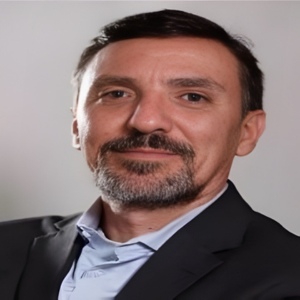
Avi Avital
University of Haifa, IsraelPresentation Title:
Physiological and psychological resilience among healthcare workers in COVID-19 units - The protective role of religious beliefs
Abstract
The COVID-19 pandemic profoundly impacted global health, with disproportionate consequences for healthcare workers (HCWs). Religious beliefs and practices may improve psychological resilience by fostering community, providing purpose, and giving meaning to hardships. Yet, how religiosity impacts HCWs during a time of crisis is unclear. We therefore performed a cross-sectional study to investigate how religiosity contributes to resilience among HCWs who were routinely exposed to high levels of stress during the pandemic, through a physiological measure (the Auditory Sustained Attention Test; ASAT) and psychological self-reports. 42 HCWs were recruited from COVID-19 units and 44 HCWs from general internal medicine units, during June and July of 2022. COVID-19 HCWs showed significantly elevated emotional and attentional dysregulation with the ASAT, as measured by acoustic startle and prepulse inhibition, that was undetectable with selfreports. Furthermore, after dividing the HCWs into a ‘high’ and ‘low’ religiosity group, those in the ‘low’ group showed higher emotional and attentional dysregulation with the ASAT. Findings suggest that the ASAT has greater sensitivity at detecting emotional and attentional dysregulations than selfreports. Moderate or high religiosity may lead to better performance on the ASAT which could suggest greater resilience to mental health problems in the face of a crisis.
Biography
Avi Avital has completed his PhD from the University of Haifa and did his post-doc at the Weizmann Institute of Science, Israel. He is the head of the Behavioral Neurobiology lab (Lab Web: https://Sites.google.com/welfare.haifa.ac.il/bnl). His transnational neuroscience papers have been cited over 4245 times, and his publication h-index is 34. He has been serving as an editorial board member of several reputed journals.

Organization Location
1309 Coffeen Avenue, STE 1200, Sheridan, Wyoming 82801, USA
General Enquiry
contact@scientexconferences.com
Finance Enquiry
finance@scientexconferences.com
Call us at
USA : (+1) 4783370198